

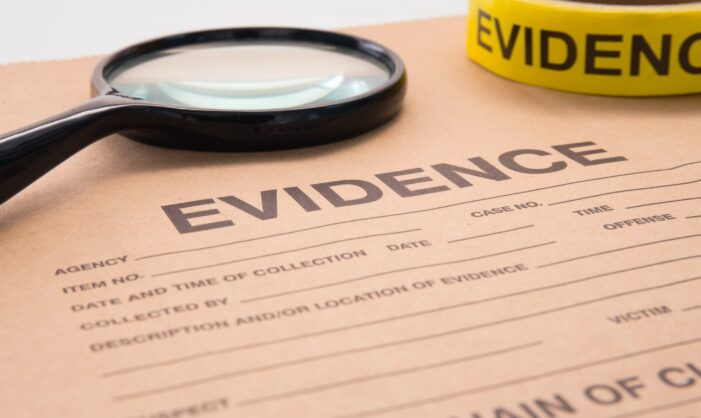
Evidence plays a central role in every criminal case. It helps courts determine whether a person accused of a crime is guilty or innocent. Without evidence, prosecutors cannot prove their claims, and judges or juries cannot make fair decisions. In criminal law, evidence must be carefully collected, examined, and presented to ensure justice is served.
Understanding the role of evidence in criminal cases is important because it affects investigations, trials, and final verdicts.
What Is Evidence in Criminal Law?
Evidence refers to any information, material, or testimony used to prove or disprove facts in a criminal case. Both the prosecution and defense may present evidence during court proceedings.
The purpose of evidence is to help establish what happened, who was involved, and whether a crime was committed.
Importance of Evidence in Criminal Cases
Evidence is essential because criminal courts rely on facts rather than assumptions or personal opinions. Strong evidence can support a conviction, while weak or unreliable evidence may lead to acquittal.
Evidence helps:
- Establish the truth
- Protect innocent individuals
- Support fair trials
- Confirm or challenge witness statements
- Link suspects to criminal activity
Courts require evidence to meet legal standards before it can be accepted during a trial.
Types of Evidence in Criminal Cases
Different kinds of evidence may be used depending on the nature of the crime and the investigation.
Physical Evidence
Physical evidence includes tangible objects connected to a crime scene. Examples include:
- Weapons
- Clothing
- Fingerprints
- Blood samples
- DNA evidence
- Drugs or illegal substances
Physical evidence can directly connect a suspect to a criminal act.
Documentary Evidence
Documentary evidence refers to written or recorded materials that help prove facts in a case.
Examples include:
- Contracts
- Emails
- Text messages
- Financial records
- Surveillance footage
- Medical reports
Digital evidence has become increasingly important in modern criminal investigations.
Witness Testimony
Witness testimony is information provided by individuals who saw, heard, or experienced something related to the crime.
There are different types of witnesses, including:
Eyewitnesses
People who directly observed the incident.
Expert Witnesses
Professionals with specialized knowledge, such as forensic scientists, doctors, or psychologists, who explain technical evidence to the court.
Witness testimony can strongly influence a case, although memory errors and false statements may sometimes occur.
Circumstantial Evidence
Circumstantial evidence indirectly suggests a fact without directly proving it. For example, finding a suspect’s fingerprints near a crime scene may suggest involvement but may not directly prove the crime occurred.
Courts may still rely heavily on circumstantial evidence when multiple facts point toward the same conclusion.
Direct Evidence
Direct evidence clearly proves a fact without requiring interpretation. Examples include:
- Video footage of a crime
- A confession
- Eyewitness accounts directly identifying the suspect
Direct evidence is often considered powerful but must still be verified for accuracy and reliability.
The Role of Forensic Science
Forensic science has become a major part of criminal investigations. Experts use scientific methods to analyze evidence and support legal cases.
Common forensic techniques include:
- DNA analysis
- Fingerprint examination
- Ballistics testing
- Toxicology reports
- Digital forensics
Scientific evidence can help investigators identify suspects, confirm timelines, and reconstruct crime scenes.
Rules for Admitting Evidence in Court
Not all evidence can be used in court. Judges decide whether evidence meets legal standards for admissibility.
Evidence must generally be:
- Relevant to the case
- Legally obtained
- Reliable and authentic
- Not unfairly prejudicial
Evidence collected illegally, such as through unlawful searches, may be excluded from trial in some legal systems.
Chain of Custody
The chain of custody refers to the documented process of handling evidence from the time it is collected until it is presented in court.
Maintaining a proper chain of custody helps prevent:
- Tampering
- Contamination
- Loss of evidence
- Questions about authenticity
Courts may reject evidence if the chain of custody is broken or unclear.
Burden of Proof in Criminal Cases
In criminal law, the prosecution carries the burden of proof. Prosecutors must prove the defendant’s guilt “beyond a reasonable doubt,” which is a high legal standard.
If the evidence does not meet this standard, the defendant may be found not guilty.
This rule helps protect individuals from wrongful convictions.
Challenges Related to Evidence
Evidence in criminal cases can sometimes be unreliable or disputed. Common challenges include:
- False witness testimony
- Mishandled evidence
- Contaminated forensic samples
- Digital evidence tampering
- Biased investigations
Defense lawyers often examine evidence carefully to identify weaknesses or inconsistencies.
The Role of Defense Attorneys
Defense attorneys review evidence presented by prosecutors and work to protect the rights of the accused. They may challenge evidence by questioning:
- How it was collected
- Whether procedures were followed
- The credibility of witnesses
- The accuracy of forensic methods
A strong defense helps ensure a fair legal process.
Conclusion
Evidence is one of the most important elements in criminal cases because it helps courts determine the truth and deliver justice fairly. From physical evidence and witness testimony to forensic science and digital records, different forms of evidence play unique roles during investigations and trials. Proper collection, handling, and examination of evidence are essential for protecting legal rights and ensuring accurate verdicts. Understanding the role of evidence helps people better appreciate how criminal justice systems work and why fairness and accuracy are critical in every case.