

Looking for a Montessori preschool near me means prioritizing your child’s independence, curiosity, and self-paced learning. A nearby Montessori preschool will give your child hands-on materials, mixed-age classrooms, and trained guides who support independence and concentration—practical benefits you can expect from day one.
You’ll learn what real Montessori preschool classrooms look like, how the approach supports social and academic growth, and which factors matter most when choosing the right preschool for your family. Use the guidance that follows to compare programs, observe classrooms, and feel confident about the choice you make for your child.
Benefits of Montessori Education
Montessori gives your child structured freedom, hands-on materials, and social practice that build independence, focus, and readiness for school. These elements work together to support emotional regulation, cooperative skills, and measurable academic progress.
Child-Centered Learning Approach
You get a classroom arranged around your child’s needs rather than a fixed timetable. Teachers observe and guide, then present activities matched to each child’s current interests and skill level. That individualized pacing helps your child master foundational skills—like practical life tasks, sensorial exploration, and early math—before moving on.
Materials are concrete and self-correcting, so your child can practice independently and recognize errors without constant adult correction. This fosters concentration and intrinsic motivation. You’ll notice increased problem-solving and persistence because children choose meaningful work and repeat it until they achieve mastery.
Social and Emotional Growth
Montessori classrooms mix ages, which lets your child learn collaboration through real interactions. Younger children imitate older peers; older children build leadership by mentoring. This structure teaches turn-taking, empathy, and respectful communication in everyday activities.
The emphasis on practical life skills trains emotional regulation—your child practices patience, handling frustrations, and finishing tasks. Teachers coach conflict resolution with precise language and role-modeling, so your child learns to express needs clearly and negotiate solutions. These patterns translate to better behavior at home and in later classrooms.
Academic Preparedness
Montessori prepares your child for conventional academics by building deep conceptual understanding, not rote memorization. Early math and literacy use multi-sensory tools (e.g., sandpaper letters, bead chains) that make abstract ideas tangible. That foundation accelerates reading fluency and number sense once formal instruction begins.
Classrooms encourage sustained work cycles of 30–60 minutes, developing executive functions like attention control and task planning. These skills improve classroom behavior and standardized test performance later on. You’ll find children transition to public or private elementary programs with strong study habits and a positive attitude toward learning.
Choosing the Right Preschool
You want a preschool that matches your child’s learning needs, family schedule, and values. Focus on credentials, the daily classroom setup, and how easy it is to get there.
Accreditation and Teacher Qualifications
Look for schools accredited by recognized Montessori organizations or regional education authorities. Accreditation shows the program follows Montessori standards and has met external quality checks. Ask for the specific accrediting body and the date of the most recent review.
Verify teacher credentials: require at least one lead teacher with an AMS, AMI, or similarly recognized Montessori diploma for your child’s age group. Check for state early childhood education certifications and ongoing professional development. Ask about staff-to-child ratios and whether assistants have background checks and first-aid/CPR training. Request recent staff turnover data; low turnover often means more consistent relationships for your child.
Classroom Environment and Materials
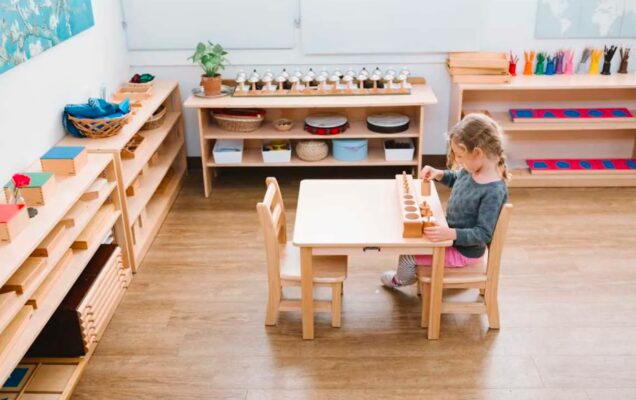
Inspect the classroom for purpose-built, child-sized materials arranged on low shelves. Authentic Montessori classrooms feature single-purpose learning tools (e.g., pink tower, bead chains) that promote hands-on, sequential learning. Note whether materials are accessible and well-maintained.
Observe how children move: do they work independently, choose activities, and transition calmly? Look for mixed-age grouping (e.g., 3–6 years) and uninterrupted work periods of at least 60–90 minutes. Check for clear areas for practical life, sensorial work, language, math, and cultural studies. Confirm routines for outdoor play, snack, and quiet time to ensure balance.
Location and Accessibility
Choose a location that fits daily logistics: proximity to home or work reduces stress and late arrivals. Confirm drop-off and pick-up procedures, available parking, and whether the school offers staggered hours or before/after care to match your schedule.
Assess physical accessibility for strollers and mobility needs, and check safety features like secure entry, fencing, and visitor policies. Ask about local transportation options if you rely on public transit. Finally, verify emergency plans and how the school communicates delays, closures, or inci