

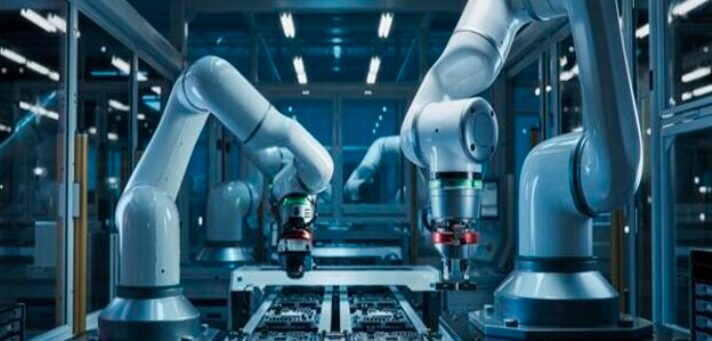
Robotics has become a major driving force behind innovation and efficiency in modern industries. From manufacturing and healthcare to agriculture and logistics, robotic technology is transforming the way businesses operate. Companies are increasingly using robots to automate repetitive tasks, improve accuracy, reduce costs, and enhance productivity.
As artificial intelligence and automation technologies continue to advance, robotics is playing an even greater role in shaping the future of industries worldwide.
What Is Robotics?
Robotics is a branch of technology that involves designing, building, and operating machines capable of performing tasks automatically or semi-automatically. These machines, known as robots, can handle tasks that may be repetitive, dangerous, or highly precise.
Modern robots often combine:
- Artificial intelligence (AI)
- Sensors
- Machine learning
- Automation systems
- Computer programming
This combination allows robots to perform complex functions with minimal human intervention.
Robotics in Manufacturing
Manufacturing is one of the industries most transformed by robotics. Factories use robotic systems to assemble products, handle materials, and perform quality inspections.
Benefits of robotics in manufacturing include:
- Faster production speeds
- Improved product quality
- Reduced human error
- Lower labor costs
- Increased workplace safety
Industrial robots are commonly used in automobile production, electronics manufacturing, and packaging industries.
Improving Workplace Safety
Many industrial environments involve dangerous tasks that can put workers at risk. Robots help reduce workplace injuries by handling hazardous jobs such as:
- Heavy lifting
- Chemical handling
- Welding
- Mining operations
- High-temperature manufacturing
Using robotics in risky environments helps companies improve employee safety while maintaining operational efficiency.
Robotics in Healthcare
The healthcare industry is rapidly adopting robotics to improve patient care and medical procedures. Medical robots assist doctors, nurses, and surgeons in various healthcare tasks.
Robotics in healthcare is used for:
- Robotic-assisted surgeries
- Rehabilitation therapy
- Patient monitoring
- Medicine delivery
- Laboratory automation
Surgical robots provide high precision, helping doctors perform minimally invasive procedures with greater accuracy.
Role of Robotics in Logistics and Warehousing
Warehouses and logistics companies use robots to manage inventory, sort packages, and speed up delivery operations.
Robotics improves logistics by:
- Automating package sorting
- Reducing delivery processing times
- Managing warehouse inventory efficiently
- Improving order accuracy
Large e-commerce companies rely heavily on robotic systems to meet growing customer demands and faster shipping expectations.
Robotics in Agriculture
Agriculture is also benefiting from robotic technology. Farmers use robots and automated machines to improve crop production and reduce manual labor.
Agricultural robots can perform tasks such as:
- Planting seeds
- Harvesting crops
- Monitoring soil conditions
- Spraying pesticides
- Managing irrigation systems
These technologies help increase efficiency and support sustainable farming practices.
Enhancing Precision and Accuracy
One of the biggest advantages of robotics is precision. Robots can perform highly detailed tasks repeatedly without losing accuracy.
This is especially valuable in industries such as:
- Electronics manufacturing
- Aerospace engineering
- Pharmaceutical production
- Medical surgery
Precision robotics helps improve product quality and reduce waste.
Supporting 24/7 Operations
Unlike human workers, robots can operate continuously without needing breaks or rest. This allows businesses to maintain around-the-clock production and improve overall efficiency.
Continuous operations help companies:
- Increase output
- Meet tight deadlines
- Reduce downtime
- Improve productivity
This advantage is particularly important in large-scale manufacturing and logistics industries.
Robotics and Artificial Intelligence
Artificial intelligence is making robots smarter and more adaptable. AI-powered robots can analyze data, learn from experiences, and make decisions in real time.
AI integration allows robots to:
- Recognize objects
- Navigate environments
- Predict maintenance needs
- Improve task efficiency
- Interact with humans more effectively
The combination of robotics and AI is driving the next generation of industrial automation.
Reducing Operational Costs
Although robotic systems may require significant initial investment, they often reduce long-term operational costs.
Businesses can save money through:
- Lower labor expenses
- Reduced production errors
- Increased efficiency
- Less material waste
- Faster production cycles
These savings can improve profitability over time.
Robotics in Customer Service
Some industries use robots to enhance customer experiences. Service robots are becoming common in hotels, restaurants, airports, and retail stores.
Examples include:
- Automated reception assistants
- Self-service kiosks
- Delivery robots
- Cleaning robots
These technologies help businesses improve service speed and operational efficiency.
Challenges of Robotics in Industries
Despite its benefits, robotics also presents certain challenges for businesses and workers.
Common concerns include:
- High implementation costs
- Maintenance and repair expenses
- Employee training requirements
- Cybersecurity risks
- Job displacement concerns
Companies must balance automation with workforce development and responsible technology adoption.
Future of Robotics in Modern Industries
The future of robotics looks highly promising as technology continues to evolve. Advanced robotics systems are expected to become more intelligent, affordable, and widely accessible across industries.
Future developments may include:
- Collaborative robots (cobots) working alongside humans
- AI-driven autonomous systems
- Smarter warehouse automation
- Advanced medical robotics
- Self-driving industrial vehicles
Robotics is likely to become even more integrated into daily business operations.
Conclusion
Robotics is transforming modern industries by improving productivity, accuracy, safety, and operational efficiency. From manufacturing and healthcare to agriculture and logistics, robotic systems are helping businesses automate tasks and remain competitive in a rapidly evolving world. As artificial intelligence and automation technologies continue to advance, robotics will play an increasingly important role in shaping the future of industries and global innovation.