

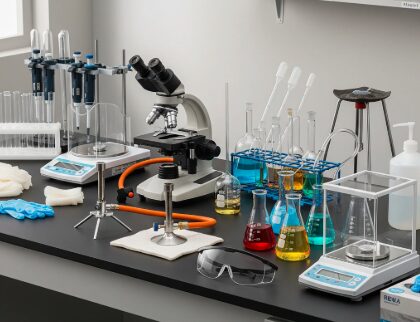
Laboratories play a crucial role in research, testing, quality control, and innovation. At the center of every successful laboratory is reliable lab equipment that supports accurate procedures and consistent results. Whether used in education, scientific research, healthcare, or industrial applications, the right lab equipment helps improve productivity, safety, and efficiency.
Why Lab Equipment Matters
Every laboratory relies on specialized tools to perform experiments, measurements, and analysis. High-quality lab equipment allows professionals to complete tasks with greater precision while minimizing errors.
From routine testing to advanced research, dependable lab equipment creates a structured environment where work can be carried out effectively. Properly selected tools also help laboratories maintain compliance with safety standards and operational requirements.
Key Benefits of Quality Lab Equipment
Improved Accuracy
Precision is essential in any laboratory setting. Reliable lab equipment helps users obtain accurate readings and repeatable results, which are critical for research and testing activities.
Enhanced Efficiency
Modern lab equipment streamlines workflows by reducing manual effort and improving process consistency. This allows laboratory personnel to focus on analysis rather than repetitive tasks.
Better Safety Standards
Safe operations are a priority in every laboratory. Well-designed lab equipment supports proper handling procedures and reduces potential risks during experiments and testing.
Factors to Consider When Choosing Lab Equipment
Selecting the right lab equipment requires careful evaluation of laboratory goals and operational needs.
Purpose and Application
Different laboratories have different requirements. Understanding the intended application helps determine the most suitable lab equipment for specific tasks.
Durability and Reliability
Laboratories often operate continuously. Durable lab equipment ensures long-term performance and minimizes interruptions caused by maintenance issues.
Ease of Use
User-friendly lab equipment improves productivity by allowing staff to work efficiently without extensive training.
The Role of Lab Equipment in Research
Research laboratories depend heavily on advanced lab equipment to explore new ideas, conduct experiments, and generate valuable data. Accurate instruments support scientific discoveries by providing dependable measurements and consistent performance.
As research becomes increasingly complex, laboratories continue to invest in innovative lab equipment that enhances analytical capabilities and supports detailed investigations.
Maintaining Lab Equipment for Long-Term Performance
Regular maintenance is essential for preserving the accuracy and lifespan of lab equipment.
Routine Inspection
Frequent inspections help identify wear and performance issues before they affect laboratory operations.
Proper Cleaning
Keeping lab equipment clean reduces contamination risks and helps maintain reliable results.
Scheduled Calibration
Calibration ensures that lab equipment continues to provide accurate measurements over time.
Emerging Trends in Lab Equipment
Technology is transforming the laboratory environment. Modern lab equipment increasingly incorporates automation, digital monitoring, and data integration capabilities.
These advancements improve workflow management and support more efficient laboratory operations. As laboratories continue to evolve, innovative lab equipment will remain a critical component of scientific progress.
Conclusion
Reliable lab equipment is essential for achieving accurate results, maintaining safety, and improving operational efficiency. By selecting high-quality tools and implementing proper maintenance practices, laboratories can support productive workflows and consistent performance. As technology advances, lab equipment will continue to play a vital role in research, testing, and scientific innovation.